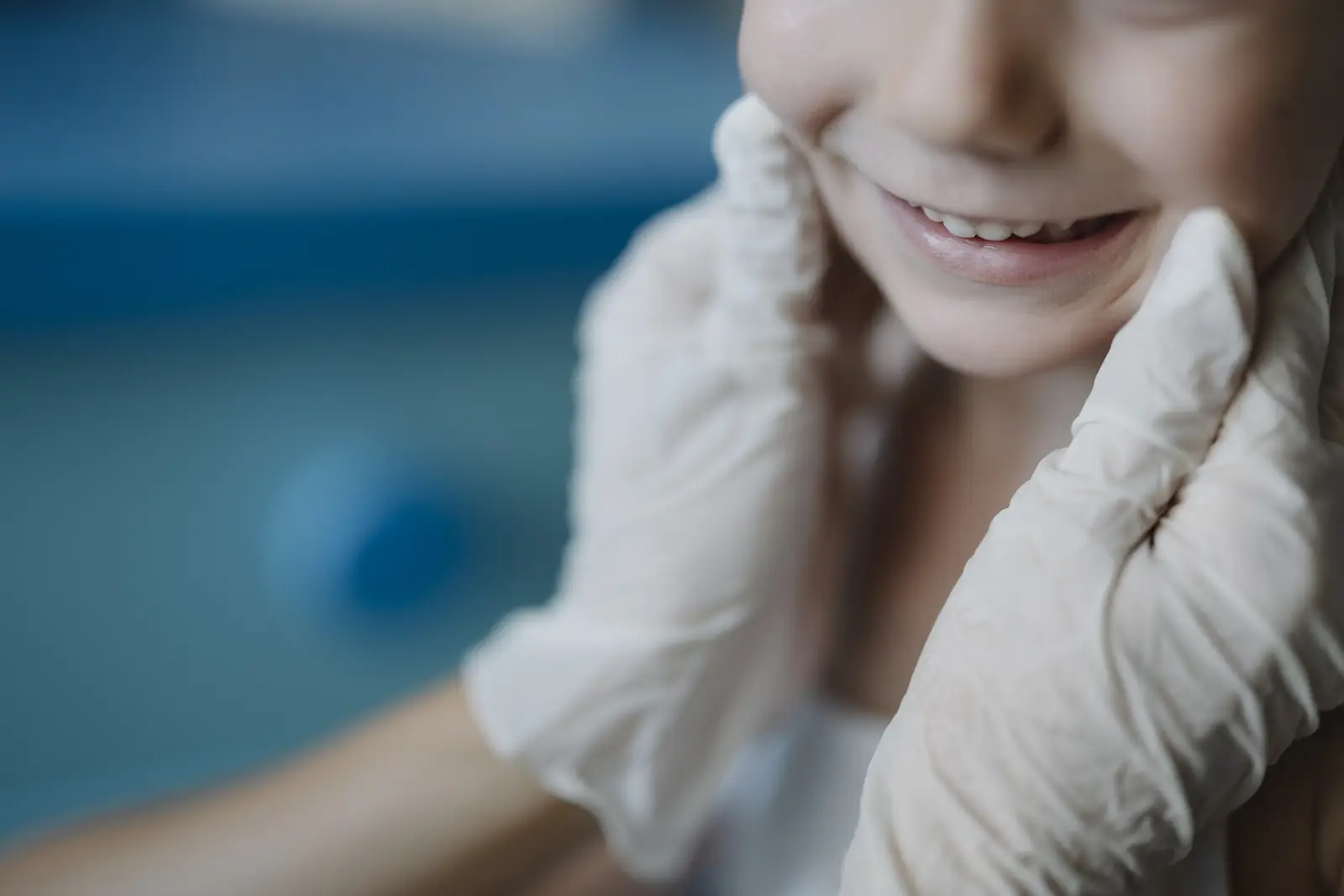
When to go
Schedule the first visit by your child's first birthday, or within six months of the first tooth coming in, whichever comes first.
What happens
For babies and toddlers, the visit is often a "knee-to-knee" exam: your child lies back with their head in the dentist's lap while you hold their legs. The dentist looks at the teeth and gums, checks for early signs of decay, may paint on fluoride varnish, and talks with you about brushing, feeding and teething.
How to prepare
- Book a time of day when your child is usually rested.
- Keep the language simple and positive. Skip words like "hurt" or "shot."
- Bring a favorite toy or blanket.
- Bring a list of questions, such as how much toothpaste to use or whether thumb-sucking is a concern.
Brushing at home
- Under age 3: a smear of fluoride toothpaste, about the size of a grain of rice.
- Ages 3 to 6: a pea-sized amount.
- Brush twice a day. Children usually need help brushing until about age 7 or 8.
Bottles and sippy cups
Putting a baby to bed with a bottle of milk or juice can cause cavities. If your child needs a bottle at bedtime, use water.